Article
When America Buys the Yen: Why the World Should Pay Attention
A rare move, a powerful message, and what every long-term investor should understand
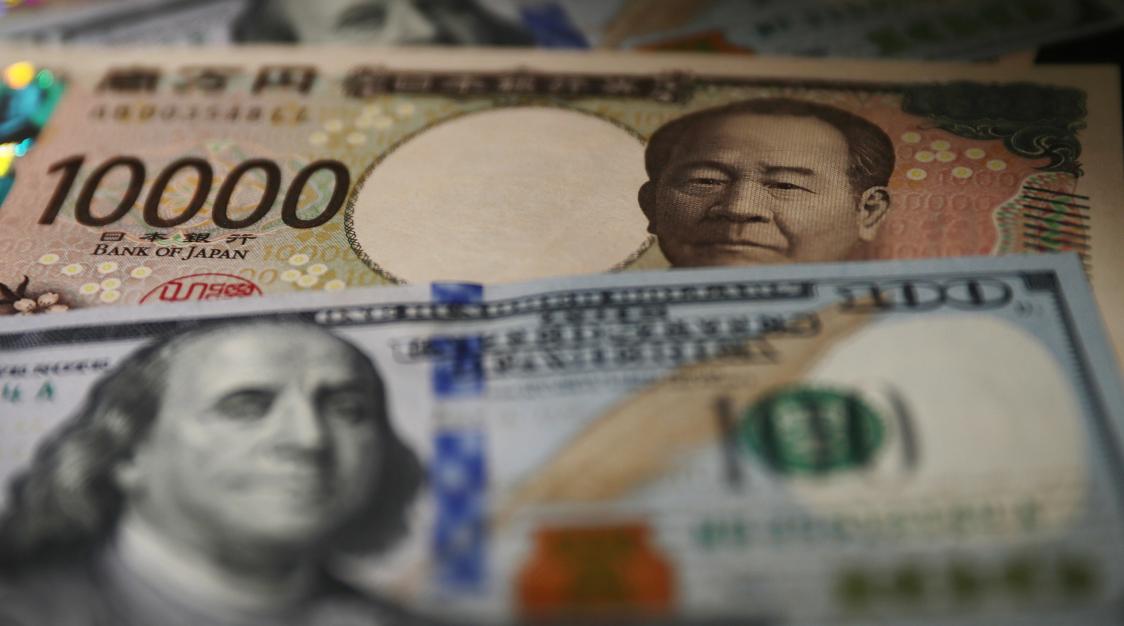
Every few years, financial markets witness an event so unusual that it forces investors to pause and ask a bigger question.
The recent decision by the United States to join Japan in buying the Japanese Yen is one such moment.
At first glance, it sounds technical, two governments buying one currency. But beneath the surface lies a fascinating story about global power, interest rates, geopolitics, and the future of financial markets.
More importantly, it reminds investors that currencies are no longer just economic tools, they are strategic weapons.
What actually happened?
Last week, the U.S. Treasury and Japanese authorities conducted a rare coordinated intervention to support the Japanese Yen, marking the first such joint action in decades. Reports suggest Japan spent tens of billions of dollars buying its own currency, while the U.S. supported the effort in an unusual manner by selling euros rather than dollars to purchase yen.
The Yen immediately appreciated sharply.
Markets were surprised.
Not because Japan intervened, it has done so before.
But because America joined the intervention.
That changes the significance entirely.
Why was the Yen collapsing?
Currencies move for one primary reason:
Capital flows toward higher returns.
For almost three decades Japan maintained extremely low interest rates.
Meanwhile the U.S. aggressively raised interest rates over the past few years.
That created one of the largest interest rate gaps in modern history.
Investors did something very logical.
They borrowed money cheaply in Japan.
Converted Yen into Dollars.
Invested in higher-yielding U.S. assets.
This is known as the famous Yen Carry Trade.
It became one of the largest trades in global finance.
Every time investors borrowed Yen and sold it, the currency weakened further.
Eventually the Yen reached levels not seen in almost forty years.
A quick history lesson
The Yen has always occupied a unique place in financial history.
1985 – The Plaza Accord
The United States, Japan, Germany, France and the UK agreed that the Dollar had become too strong.
They jointly intervened.
The Yen appreciated dramatically over the following years.
Ironically, many economists believe that this rapid appreciation contributed to Japan's massive asset bubble during the late 1980s.
When that bubble burst...
Japan entered what became known as the Lost Decades.
1998 – Asian Financial Crisis
The U.S. again supported Japan in stabilising the Yen during the Asian currency crisis.
2011 – After the Tsunami
Following the devastating earthquake and tsunami, the G7 coordinated intervention, this time to weaken an excessively strong Yen to help Japan's exporters recover.
2022–2024
Japan repeatedly intervened alone to slow the Yen's fall as widening interest-rate differentials drove persistent weakness.
2026
Now comes something different.
The United States itself joins Japan.
That tells us policymakers see the Yen's weakness as having broader global implications, not merely a Japanese problem.
Why would America care?
This is the most interesting question.
Normally, a stronger Dollar benefits Americans by making imports cheaper.
So why help strengthen another country's currency?
There are several possible reasons.
1. Financial stability
Japan owns one of the world's largest holdings of U.S. Treasuries.
If Japan had to sell large amounts of Treasuries to defend the Yen, U.S. bond yields could spike, making borrowing more expensive across the American economy. Coordinated intervention can reduce that pressure.
2. Preventing disorderly markets
Currencies are expected to move.
They are not expected to collapse.
Rapid depreciation invites speculation.
Once hedge funds smell panic, they tend to amplify it.
Sometimes central banks simply step in to remind markets:
"We are bigger than you."
3. Geopolitics
The U.S. and Japan remain two of the world's closest strategic allies.
A weak Japanese economy affects supply chains, technology, semiconductors and regional security.
Supporting the Yen is therefore not purely an economic decision.
It is also a geopolitical one.
Does intervention actually work?
History suggests:
Yes... but only temporarily.
Markets eventually follow economic fundamentals.
If Japan keeps interest rates much lower than the rest of the world...
Money will continue flowing elsewhere.
Central banks can slow the journey.
They rarely change the destination.
That is why many economists argue that durable Yen strength ultimately depends on Japan's own monetary and economic policies, not intervention alone.
What should investors learn?
The news itself is interesting.
The lessons are even more valuable.
1. Currency markets matter
Many Indian investors ignore currencies because they invest only in domestic assets.
That can be a mistake.
Currencies influence:
Gold
Oil
Inflation
Foreign investment
Export companies
IT businesses
Global equities
Understanding currencies means understanding the hidden engine behind many asset prices.
2. Never fight central banks
When governments coordinate...
Markets pay attention.
Even the world's biggest hedge funds become cautious.
History repeatedly shows that betting against coordinated central bank action can be painful.
3. Diversification is becoming more important
The world is becoming increasingly multipolar.
The Dollar remains the dominant reserve currency.
But the global financial system is gradually becoming more diversified.
Gold reserves are rising.
Central banks are diversifying reserve assets.
Regional trade is increasingly happening in local currencies.
That doesn't mean the Dollar is disappearing.
It means the world is becoming less dependent on a single currency.
4. Don't build investment strategies around headlines
Currency interventions create dramatic news.
Long-term wealth is created by:
Owning productive businesses.
Remaining diversified.
Staying invested through cycles.
Avoiding emotional decisions.
The headline lasts a week.
Investment discipline lasts decades.
What does this mean for India?
India occupies an interesting position.
A stronger Yen can improve Japanese purchasing power and support outbound investment over time, which could benefit countries like India that receive Japanese capital.
For Indian investors:
Export-oriented sectors should continue to be evaluated on business fundamentals rather than short-term currency moves.
Gold remains an important portfolio diversifier during periods of global currency uncertainty.
International diversification continues to make sense, as different currencies and economies experience different cycles.
Conclusion
The real story isn't that America bought Yen.
The real story is why it felt the need to.
Financial markets are entering an era where central banks are no longer responding only to inflation.
They are increasingly responding to geopolitics, capital flows, supply chains and financial stability.
Currencies are becoming strategic assets once again.
For investors, this is another reminder that markets are shaped by far more than quarterly earnings.
Understanding the forces behind currencies, interest rates and global policy won't help you predict tomorrow's exchange rate.
But it will help you become a better long-term investor.
And in investing, understanding the game matters far more than guessing the next move.
Related Articles