Article
The Silent Phase Before Wealth Creation: Understanding Market Consolidation
Why some of the biggest fortunes are created when markets appear to be doing nothing
Why some of the biggest fortunes are created when markets appear to be doing nothing
"The market transfers wealth from the impatient to the patient."
— Warren Buffett
Every bull market has a phase that most investors dislike.
Not because markets are falling.
But because they simply refuse to move.
Month after month...
Sometimes year after year...
The headlines become boring.
Portfolio values barely change.
Investors begin questioning their SIPs.
Many exit believing "equity isn't working anymore."
Ironically, this is often the period just before the next major wealth creation cycle begins.
What is Market Consolidation?
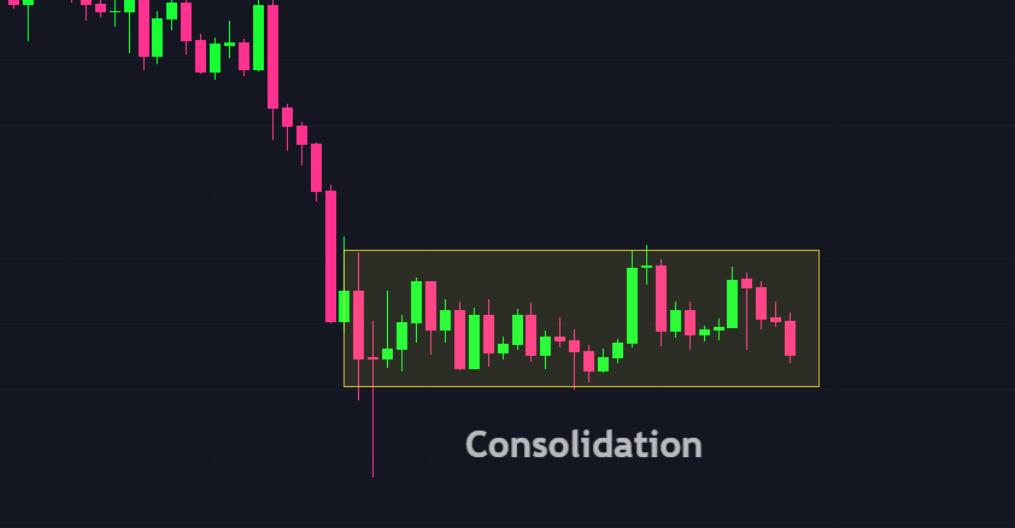
A market consolidation is a period where prices move sideways instead of trending strongly upward or downward.
Instead of generating attractive returns, markets digest previous gains by allowing:
Valuations to cool
Corporate earnings to catch up
Weak hands to exit
Long-term investors to accumulate
Think of it as a pressure cooker.
Nothing appears to happen from outside.
Inside, pressure keeps building.
Eventually it explodes.
Markets behave the same way.
Why Does Consolidation Happen?
Historically every major bull market has required a period of rest.
After large rallies:
valuations become expensive
expectations become unrealistic
retail participation peaks
leverage increases
speculative excess enters the system
Instead of correcting sharply through price, markets sometimes correct through time.
This is called time correction.
A 3-year sideways market can reduce excess valuations just as effectively as a 30% crash.
And psychologically,
time corrections are actually harder.
People tolerate falling markets better than boring markets.
History Shows the Same Pattern
Below are some of the best-known periods where investors experienced years of frustration before powerful bull markets followed.
Consolidation Period | Duration | Approx. Return During Phase | What Happened Next |
US Market (1968–1980) | 12 years | ~0% | 1980–2000: +1,279% (≈14% CAGR) |
US Market (2000–2013) | 13 years | ~0% | 2013–2024: +304% (≈12% CAGR) |
US Market (1929–1954) | 25 years | Flat | 1954–1968: +239% |
India (2008–2013) | ~5 years | Near flat | Nifty nearly tripled over the next decade |
India (2024–2026)* | ~2 years | Minimal returns | Too early to know; history suggests extended consolidations have often preceded stronger forward returns, though there is no guarantee. |
Current period shown for context only, not as a prediction.
The pattern is striking.
Markets spend years frustrating investors before rewarding those who stay invested.
The Mathematics of Consolidation
Imagine two investors.
Investor A
Invests ₹10 lakh.
Market gives 0% return for three years.
He exits.
Final Value:
₹10 lakh
Investor B
Invests the same ₹10 lakh.
Waits through the same consolidation.
Market then compounds at 18% annually for five years.
Final Value:
₹22.9 lakh
Same market.
Same starting point.
Different behaviour.
The difference wasn't stock selection.
It was patience.
What Happens During Consolidation?
Although index returns appear flat, several important things are happening beneath the surface.
1. Weak Investors Leave
Investors expecting quick profits begin exiting.
Trading activity reduces.
Speculation declines.
This improves the quality of remaining market participants.
2. Corporate Earnings Continue Growing
Even if prices remain flat,
good companies continue to:
grow revenues
improve margins
reduce debt
generate cash flows
Eventually prices reconnect with fundamentals.
3. Valuations Become Attractive
If earnings grow 15% annually while prices remain flat for three years,
the Price-to-Earnings ratio automatically falls.
Markets become healthier without necessarily falling.
4. Smart Money Accumulates
Institutions rarely chase euphoric rallies.
Historically they accumulate quietly during periods when retail investors lose interest.
5. Leadership Changes
Every bull market has different winners.
Technology.
Banking.
Manufacturing.
Capital Goods.
PSUs.
Pharma.
Consolidation is when leadership rotates.
The next winners quietly emerge while yesterday's stars cool off.
What Should Investors Do?
History suggests that consolidation is not a signal to abandon equities, but it can be an opportunity to improve portfolio quality and discipline.
Instead of asking:
"Why isn't my portfolio moving?"
Ask:
"Am I accumulating quality assets while prices are reasonable?"
Some practical actions include:
✓ Continue SIPs without interruption.
✓ Rebalance if equity allocation has drifted significantly.
✓ Increase exposure gradually if your long-term goals and risk tolerance allow.
✓ Avoid chasing speculative themes that have already run far ahead.
✓ Maintain an emergency fund so you are not forced to sell during periods of low returns.
Numbers That Matter
Since 1990:
Nifty has compounded at roughly 13% annually over the long term.
One-year returns have frequently been negative.
Over rolling 10-year holding periods, the historical incidence of negative returns has been extremely low.
This highlights one of the most important truths in investing:
The longer your investment horizon, the lower the probability that short-term consolidation determines your outcome.
The Biggest Mistake Investors Make
Investors usually don't leave during crashes.
They leave during boredom.
The headlines stop.
Returns disappear.
Friends begin discussing other opportunities.
Property.
Gold.
Crypto.
Fixed deposits.
Business.
That's usually when equity markets quietly prepare for the next leg higher.
History repeatedly shows that many of the strongest long-term returns begin when investor sentiment is at its weakest, not necessarily during panic, but during prolonged indifference.
The ARKa Perspective
At ARKa Invest, we believe wealth is rarely created by reacting to every market movement.
It is created by understanding where we are in the market cycle and responding with discipline rather than emotion.
Consolidation is not the absence of opportunity, it is often the period when future returns are quietly being prepared.
As the old investing adage goes:
Bull markets make headlines. Consolidation builds portfolios.
Sometimes, the most productive thing an investor can do is not to predict the next move, but to stay invested, stay diversified, and let time do the heavy lifting.
Related Articles