Article
Commodities - Why the World's Oldest Asset Class Still Moves Markets
Understanding commodity cycles and what every investor should know before chasing the next rally.
Understanding commodity cycles and what every investor should know before chasing the next rally.
There is an old saying on Wall Street:
"The cure for high prices is high prices, and the cure for low prices is low prices."
No asset class demonstrates this better than commodities.
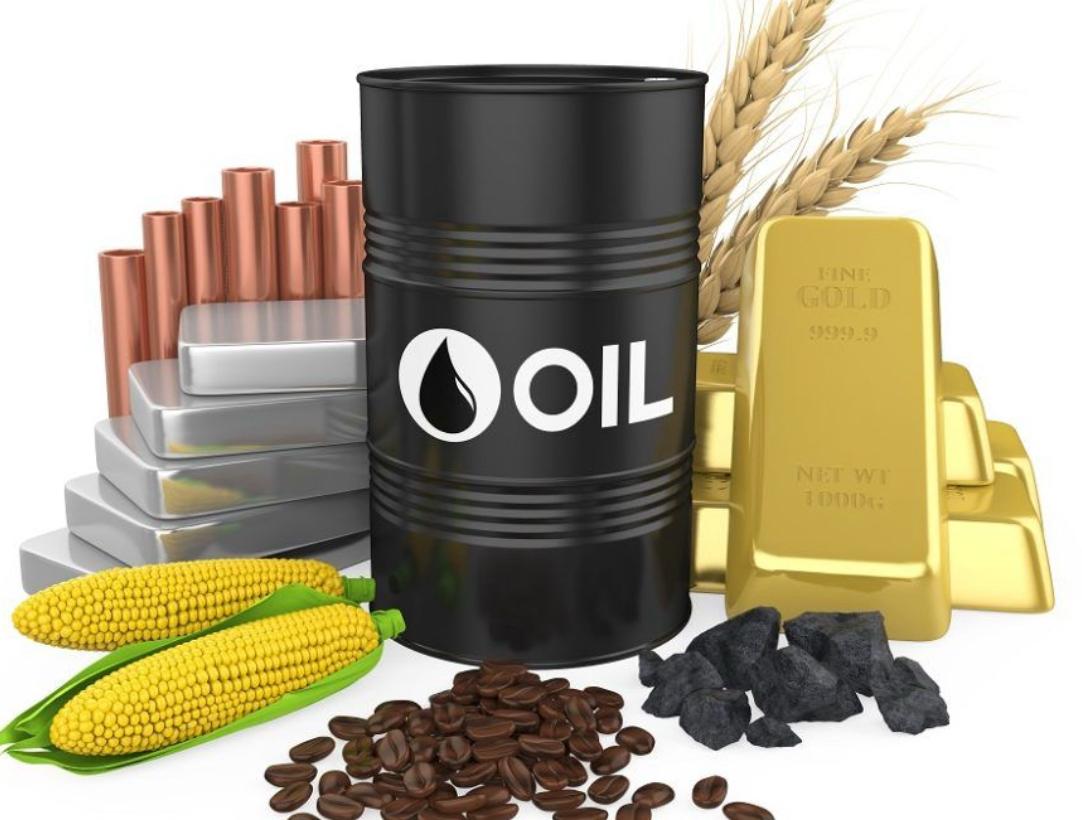
Whether it's crude oil, gold, copper, wheat, coffee, lithium or natural gas, commodities have one characteristic that sets them apart from most financial assets, they move in cycles. Unlike businesses that can innovate, launch new products or improve profitability, commodities are driven by a simple equation that has governed markets for centuries:
Supply versus Demand.
Understanding this relationship can help investors make better decisions, not just when investing in commodities themselves, but also in commodity-linked companies and even the broader equity markets.
Every Commodity Tells a Story
When we think about investing, we often focus on companies.
But commodities are the raw materials that make those companies possible.
Copper builds cities.
Steel builds infrastructure.
Oil moves economies.
Gold protects wealth.
Coffee starts the day for billions of people.
Every commodity has a demand story and a supply story. Prices rise when demand outpaces available supply and fall when production exceeds consumption.
While this sounds straightforward, the reality is anything but.
Unlike manufacturing businesses that can quickly increase production, commodity supply often takes years to respond.
A new copper mine can take more than a decade from discovery to commercial production. An offshore oil field may require billions of dollars and years of development. Even agricultural production depends on weather patterns that no one controls.
This delayed response is what creates cycles.
The Commodity Cycle
Almost every commodity goes through four broad phases.
Phase 1: Low Prices
When prices remain low for an extended period, producers struggle.
High-cost producers shut operations.
Exploration budgets are cut.
New projects are postponed.
Investments dry up because producing more of the commodity is no longer economically attractive.
At this stage, markets usually believe prices will stay depressed forever.
History suggests otherwise.
Phase 2: Demand Recovers
Economic activity improves.
Infrastructure spending increases.
Manufacturing expands.
Consumers begin spending again.
Demand starts rising.
Initially, existing inventories satisfy this increase.
Eventually inventories begin shrinking.
Prices slowly recover.
Most investors still ignore the sector.
Phase 3: Supply Shortages
This is where markets become exciting.
Years of underinvestment mean there isn't enough new supply.
Demand continues to grow.
Inventories become critically low.
Prices rise sharply.
Mining companies, oil producers and commodity exporters suddenly become market favourites.
News headlines begin talking about "supercycles."
Retail investors rush in.
This is usually when optimism becomes excessive.
Phase 4: Over-investment
High prices encourage producers to invest aggressively.
New mines open.
Oil drilling accelerates.
Farmers plant larger acreage.
Capacity expands across the industry.
Eventually supply catches up.
Then exceeds demand.
Prices begin falling.
The cycle starts again.
Why Commodity Cycles Last Longer Than Stock Market Cycles
One of the biggest misconceptions is that commodities behave like equities.
They don't.
Companies can improve efficiency, reduce costs, develop new products or acquire competitors.
Commodities cannot innovate.
Copper is still copper.
Oil remains oil.
Their prices are almost entirely determined by market balance.
Because new production takes years to develop, commodity cycles often last much longer than investors expect.
That's why markets frequently overshoot, both upwards and downwards.
The Psychology of Commodity Investing
Perhaps the biggest challenge isn't understanding commodities.
It's understanding ourselves.
Investors often buy commodities after prices have already doubled because recent performance creates confidence.
Likewise, they sell after prolonged declines because they assume prices will never recover.
This behaviour is remarkably consistent across decades.
Consider gold.
When gold is making new highs, every conversation is about preserving wealth.
When it falls for several years, investors lose interest.
The same psychology applies to oil, copper, natural gas and agricultural commodities.
Markets don't just move because of economics.
They move because of human emotions.
Fear.
Greed.
Recency bias.
Herd mentality.
Understanding these behavioural patterns often matters as much as understanding supply-demand data.
Are We Seeing a Commodity Supercycle?
Every few years the phrase "commodity supercycle" returns.
A supercycle refers to an unusually long period of structurally high commodity demand, often driven by transformational changes in the global economy.
Past examples include:
Industrialisation of the United States.
Post-war reconstruction.
China's rapid urbanisation between 2000 and 2020.
Today, many analysts argue that the global energy transition could become the next driver.
Electric vehicles require significantly more copper than conventional vehicles.
Renewable energy infrastructure consumes large quantities of aluminium, copper, nickel and rare earth materials.
Grid upgrades require enormous amounts of industrial metals.
Whether this evolves into a true supercycle remains uncertain.
But long-term structural demand appears stronger than it has been for many years.
What About Gold?
Gold deserves special mention because it behaves differently from most commodities.
Unlike oil or copper, gold isn't primarily consumed.
Nearly all the gold ever mined still exists.
Its price depends less on industrial demand and more on investor sentiment.
Central bank buying.
Interest rates.
Inflation expectations.
Currency movements.
Geopolitical uncertainty.
For many investors, gold serves as a portfolio diversifier rather than a growth asset.
Its role isn't necessarily to generate the highest returns.
Its purpose is often to preserve purchasing power during periods of uncertainty.
How Should Investors Think About Commodities?
Commodity investing isn't about predicting tomorrow's prices.
It's about recognising where we are in the cycle.
Some guiding principles include:
Avoid chasing sharp rallies simply because prices are making headlines.
Pay attention to years of underinvestment, not just today's shortages.
Understand that supply responses usually lag demand by several years.
Diversify rather than betting heavily on a single commodity.
Remember that commodity companies carry additional operational risks beyond commodity prices themselves.
Treat commodities as one component of a diversified portfolio, not the foundation of it.
For long-term investors, commodity exposure can provide diversification because commodity prices often respond differently than equities or bonds during inflationary periods.
However, timing remains challenging.
Even experienced professionals struggle to consistently predict short-term commodity movements.
The Bigger Picture
Commodity markets are among the purest expressions of economics.
They remind us that no trend lasts forever.
High prices encourage more production.
Low prices discourage investment.
Eventually the balance shifts.
The cycle repeats.
For investors, the lesson is equally timeless.
Rather than reacting to headlines or short-term price movements, it pays to understand where we are in the cycle and why prices are moving.
Patience often creates better outcomes than prediction.
After all, commodities have been shaping civilizations for thousands of years.
Their cycles are unlikely to change anytime soon.
ARKa’s View
Commodity markets are not merely about buying gold or trading crude oil futures. They are reflections of global economic activity, geopolitics, technological shifts and human behaviour.
While commodities can enhance diversification and help protect portfolios during inflationary periods, they are inherently cyclical and often volatile. Investors should resist the temptation to chase momentum and instead focus on understanding where the market sits within the broader cycle.
As with all investing, successful participation comes not from trying to predict every price movement, but from maintaining a disciplined, diversified and long-term approach.
At ARKa Invest, we believe that understanding cycles is just as important as selecting investments. Markets reward patience far more consistently than they reward perfect timing.
Related Articles