Article
What Next: Post Truce Scenarios
Indian Markets at a Geopolitical Inflection Point: Scenarios, Recovery Timelines & Investment Implications of the US | Iran Peace Deal
Indian Markets at a Geopolitical Inflection Point: Scenarios, Recovery Timelines & Investment Implications of the US | Iran Peace Deal
For Informational Purposes Only
SUMMARY
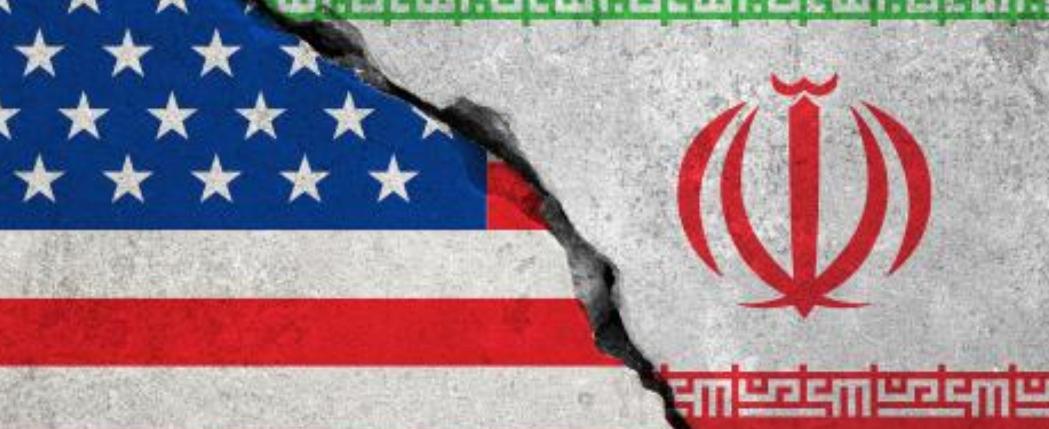
After 107 days of armed conflict that sent crude oil prices surging above $100 per barrel, triggered record FII outflows from Indian equities, and pushed the rupee to all-time lows, the US and Iran have announced a framework peace agreement, with a formal signing ceremony scheduled in Switzerland this Friday. The deal, mediated by Pakistan and Qatar, calls for the immediate and permanent termination of military operations on all fronts, the reopening of the Strait of Hormuz, and a 60-day negotiating window for nuclear de-escalation.
For India, the world's third-largest oil importer, a major recipient of Gulf remittances, and a market deeply sensitive to geopolitical risk premia, this development is structurally consequential. Indian markets have already begun to respond. But the critical question for investors is not whether a relief rally happens, it already is, but how durable it will be, how deep the recovery can go, and what the right sector playbook looks like across different outcome scenarios.
This report lays out three scenarios, a recovery timeline, a sector-level view, and a nuanced assessment of FII behaviour. As always, ARKa Invest's core philosophy applies: invest in reality, not in hope.
PART I: THE CONFLICT IN RETROSPECT | WHAT IT DID TO INDIA
To appreciate what the peace deal means, we must first reckon clearly with what the war cost India.
When the US and Israel launched coordinated strikes on Iran on February 28, 2026, the effect on Indian markets was swift and severe. The Sensex fell over 6% in March alone. Foreign Portfolio Investors, already cautious, turned decisively negative. By early April, overseas investors had withdrawn over $8 billion from Indian equities in a matter of weeks, marking the steepest monthly outflow on record. The rupee, which began the fiscal year at roughly 86 per dollar, plunged to a record low of 95 per dollar by end of March, a decline of nearly 10% in a single financial year.
The direct mechanism was oil. Brent crude, which had been trading at roughly $65–70 before the conflict, surged by over 44% after the war began. With the Strait of Hormuz, through which roughly 20% of the world's oil and LNG flows, effectively disrupted, India faced a macroeconomic triple hit: imported inflation, a widening current account deficit, and severe pressure on the rupee. The Reserve Bank of India held rates steady but found itself in a deeply uncomfortable position: unable to cut rates to support growth while oil-driven inflation persisted.
Not all sectors bled equally. Oil exploration companies (ONGC, Oil India) actually benefited from elevated crude realizations. But oil marketing companies, BPCL, HPCL, Indian Oil, absorbed the shock at subsidized prices. Airlines like IndiGo were hammered. Paint manufacturers, logistics companies, and consumer staples firms saw margin pressure. Infrastructure conglomerates with West Asia exposure, like Larsen & Toubro, faced project uncertainty. Banks and financials bore the brunt of a broad-based risk-off selloff.
PART II: THE PEACE DEAL | WHAT HAS ACTUALLY BEEN AGREED
It is essential that investors distinguish between what has been agreed today and what remains uncertain.
What is confirmed:
Immediate and permanent termination of military operations on all fronts, including Lebanon.
Commitment to reopen the Strait of Hormuz and restore freedom of navigation.
Release of frozen Iranian assets.
Lifting of the naval blockade by the US.
A formal signing ceremony in Switzerland on Friday.
What remains unresolved (the 60-day window):
The nuclear question, Iran's uranium enrichment, down-blending of highly enriched uranium, IAEA monitoring.
Iran's support for Hezbollah and other regional proxies.
The broader architecture of sanctions relief, the EU, UK, Germany, France, and Italy have said they are ready to lift sanctions contingent on Iran's nuclear steps.
Israel's posture. Prime Minister Netanyahu has confirmed Israel is "not a party" to the deal and considers the current agreement a "deep disappointment."
This distinction matters enormously for market durability. The deal, as it stands, is a memorandum of understanding and ceasefire framework, not a final peace treaty. The 60-day negotiating window introduces structured uncertainty, and markets will price this accordingly.
PART III: MARKET REACTION | WHAT HAS ALREADY BEEN PRICED IN
Indian markets have been re-rating in anticipation of this deal for weeks. The Sensex hit an intraday high of 74,859 on Friday June 12, surging over 1,026 points from Thursday's close, as the diplomatic breakthrough became clearer. The Nifty climbed to 23,373. On June 15, with the deal formally announced, Gift Nifty was trading nearly 392 points or 1.66% higher at 24,021 as of this morning. Brent crude has fallen to sub $80, down over 5-6% in futures trading.
The relief rally has already captured a meaningful portion of the good news. The rupee has strengthened to approximately 94.9 per dollar from its record low of 95+. Oil-sensitive sectors have led the bounce: airline IndiGo has surged 8%, BPCL and HPCL are up 2.5–3.5%, and Larsen & Toubro has gained meaningfully.
What this tells us is that the easy money, the pure geopolitical risk-off premium being unwound, is largely being made right now. The harder question is what comes next.
PART IV: THREE SCENARIOS AND RECOVERY TIMELINES
SCENARIO 1 “ "CLEAN DEAL" (Probability: 30%)
The 60-day nuclear negotiations succeed. Iran agrees to verifiable uranium down-blending. Sanctions are progressively lifted. The Strait of Hormuz is fully operational within 4–6 weeks.
Market Outcome: In this scenario, Brent crude retreats to the $70–75 range by Q3 2026. The rupee strengthens to 90–92 per dollar. FII flows reverse sharply, we estimate a potential inflow of $10–15 billion over 3–6 months as India's macro fundamentals (falling inflation, CAD compression, rate cut optionality for the RBI) become compelling again.
Nifty, which currently trades around 23,600, could test 25,500–26,000 by September–October 2026, a further 8–10% upside from current levels. This would represent a full recovery from the February 2026 lows (around 22,000) and new all-time highs.
Timeline: 3–6 months for a full recovery and rerating.
Sectors to own: Aviation (IndiGo, SpiceJet), Paint manufacturers (Asian Paints, Berger), OMCs (BPCL, HPCL, IOC), Auto and Auto Ancillaries, FMCG, Private Banks, and Infrastructure with Gulf project pipelines.
SCENARIO 2 : "FRAGILE PEACE" (Probability: 50%) : Base Case
The ceasefire holds but nuclear talks drag beyond 60 days. Some sanctions remain. The Strait of Hormuz reopens partially but mine-clearing and infrastructure repair delays persist for 6–10 weeks. Israel continues low-intensity operations in Lebanon that periodically unsettle sentiment.
Market Outcome: This is ARKa Invest's base case. Crude oscillates in the $80–92 range, below conflict peaks but not yet at pre-war levels. The rupee stabilizes in the 92–95 band. FII flows turn cautiously positive, monthly inflows of $1–3 billion, but full conviction returns only once the 60-day nuclear window resolves.
Nifty climbs gradually to 24,000–24,500 by Q3 end, consolidating before the next major move. The market will function as a "headline trader" rallying on positive nuclear news, retreating on Israeli provocations or Iranian parliamentary pushback.
Timeline: 6–9 months for a meaningful, durable recovery. Market returns in the 10–15% range for calendar year 2026 from current levels, with elevated intra-period volatility.
Strategy: Staggered deployment. Build positions in direct beneficiaries (aviation, OMCs, paints) on dips. Avoid over-concentration in rate-sensitive financials until RBI gets room to cut.
SCENARIO 3 : "DEAL COLLAPSE" (Probability: 20%)
Nuclear talks break down within 60 days. Iranian hardliners or domestic opposition pressure Tehran to walk back commitments. A new Israeli strike in Lebanon or Syria triggers Iranian retaliation. The ceasefire unravels.
Market Outcome: This is the tail risk scenario that cannot be dismissed. Crude spikes back above $95–100. The rupee returns to 95+ territory and the RBI is forced back into firefighting mode. FII outflows resume, potentially another $5–8 billion over 6–8 weeks. The Sensex re-tests the 70,000 zone.
Strategy: In this scenario, defensives (pharma, IT, gold-linked instruments) outperform. Investors with near-term liquidity needs should maintain meaningful cash buffers. Rupee hedges on import-heavy portfolios are warranted.
Timeline: Recovery delayed to H1 2027 at the earliest.
PART V: FII BEHAVIOUR | THE CRUCIAL SWING FACTOR
The FII story during this conflict has been the most dramatic in recent memory. From the outbreak of war in late February to early April, FIIs pulled out over $8 billion, a monthly outflow record. This was not merely risk-aversion to India specifically; it was a global EM flight-to-safety trade, with the US dollar strengthening and safe-haven assets attracting flows.
The structural case for India, strong GDP growth, consumption-driven domestic demand, improving corporate earnings, and geopolitical positioning as a beneficiary of supply chain diversification from China, remained intact throughout the conflict. The FII exodus was situational, not fundamental.
This is critically important for the recovery thesis. When the geopolitical fog clears, the structural case reasserts itself powerfully. We saw a preview of this dynamic: as ceasefire hopes emerged in late March, the Sensex bounced 1.6%, and L&T, Bajaj Finance, and Titan surged 4%+. When the first conditional two-week ceasefire was announced on April 7, Sensex surged 3.71% in a single session. FII flows, while still volatile, began to show signs of stabilization.
Our FII forecast under the base case (Scenario 2):
June–July 2026: Net inflows of $2–4 billion as the deal is signed and crude falls below $85. Momentum buying and risk-on positioning.
August–September 2026: Inflows moderate to $1–2 billion/month. Watching the nuclear negotiation closely.
October–November 2026: If 60-day window resolves positively, FII flows could accelerate to $4–6 billion/month as India becomes a consensus overweight among EM fund managers.
The rupee, currently at ~95, could strengthen to 91–93 per dollar by year-end under this scenario, itself a significant real returns boost for foreign investors in Indian equities.
One critical wildcard: US Federal Reserve policy. If the peace deal removes inflationary pressure globally (via lower oil), and US inflation data cooperates, the Fed may have renewed room to cut rates. A weaker dollar environment is historically highly supportive of EM inflows, and India tends to be among the biggest beneficiaries.
PART VI: SECTOR PLAYBOOK
DIRECT BENEFICIARIES | BUY NOW
Oil Marketing Companies (BPCL, HPCL, IOC) The most direct beneficiaries of falling crude. OMCs have absorbed massive under-recoveries during the conflict. Every $10/barrel fall in Brent translates into material margin expansion. These are strong buys under Scenarios 1 and 2.
Aviation (IndiGo / InterGlobe Aviation) Aviation turbine fuel (ATF) is the largest cost component for Indian carriers. IndiGo surged 10% during the April ceasefire rally. With crude falling and passenger demand remaining robust, aviation is a high-conviction recovery trade.
Paints (Asian Paints, Berger) Crude oil derivatives constitute 30–40% of input costs for paint manufacturers. These stocks have been de-rated meaningfully during the conflict. A sustained crude decline restores margins and justifies multiple re-expansion.
Auto & Auto Ancillaries (Maruti, Bajaj Auto, Eicher) Lower fuel prices support consumer sentiment and vehicle demand. The auto sector is also a proxy for the broader consumer confidence recovery.
SECONDARY BENEFICIARIES - ACCUMULATE SELECTIVELY
Infrastructure (L&T, KEC International) L&T has significant West Asia project exposure. A return to normalcy in the Gulf region, and potential reconstruction contracts , is a longer-term positive. Already showing strong stock performance (+7.1% in April ceasefire rally).
Private Banks & NBFCs (HDFC Bank, ICICI Bank, Bajaj Finance) If the RBI gains room to cut rates (CPI inflation moderating on lower oil, favorable base effects), the rate-sensitive financial sector is the next major leg of the recovery trade. Currently still cautious; accumulate on weakness.
Real Estate (DLF, Godrej Properties) Lower inflation and potential rate cuts will benefit home loan affordability. Real estate was up 6% in the April ceasefire bounce, a leading indicator of rate-cut expectations.
CAUTIOUS / AVOID NEAR-TERM
Oil Exploration (ONGC, Oil India) These benefited from elevated crude during the war. A peace deal is structurally negative for their crude realizations. Re-rate lower on sustained peace.
IT (TCS, Infosys, Tech Mahindra) IT performance is more correlated with US growth and discretionary tech spending than with the geopolitical situation. The sector actually underperformed during the ceasefire rallies. Focus here remains on US macro trajectory, not the peace deal.
Gold / Gold Miners Geopolitical risk-off premium in gold will partially unwind. Tactically less attractive in a "clean deal" scenario.
PART VII: SUSTAINABILITY ASSESSMENT : IS THIS RALLY REAL?
This is the most honest and important question Arka Invest can answer for our clients.
The rally is real, but it is running ahead of the resolution.
Three factors drive our tempered optimism:
1. The Hormuz Timeline is Not Immediate. Even with political will on both sides, mine-clearing, infrastructure repair, and commercial shipping confidence will take time to restore. Analysts estimate 4–10 weeks before full pre-war shipping volumes resume through the Strait. Oil prices will reflect this lag, they will fall, but not all at once.
2. The Nuclear Overhang Is Real. The 60-day window to resolve enrichment, monitoring, and sanctions architecture is genuinely challenging. This is not a technical exercise; it involves domestic political dynamics in both the US and Iran, plus Israel's unpredictable posture. Markets will trade nervously around every data point from Geneva and Vienna over the next two months.
3. The Indian Market Has Pre-Priced Significant Good News. With Gift Nifty pointing at 24,000+ and crude already at $83.67 this morning, a "buy the rumour, sell the news" dynamic is entirely possible in the near term. A tactical consolidation , or even a 2–3% pullback, after the formal signing on Friday would be healthy and not a signal to panic.
The medium-term case (6–18 months) is compelling. India's pre-conflict macro trajectory was strong: GDP growth of 6.5%+, corporate earnings inflecting upward, the RBI on an accommodative pivot path, and the government's capex cycle in full swing. The conflict was an exogenous shock, not a structural deterioration. As the shock reverses, India's mean reversion toward its structural growth path should reassert powerfully.
PART VIII: THE INDIA ANGLE BEYOND MARKETS
There is a dimension to this peace deal that goes beyond immediate market movements, and ARKa Invest believes investors must think about it for portfolio construction over the next 2–3 years.
Gulf remittances: India receives roughly $40–50 billion annually in Gulf remittances , the single largest source of foreign exchange inflows after IT exports. The conflict severely disrupted economic activity in the Gulf, pressuring these flows. Normalization of the Gulf economy is a multi-quarter positive for India's external balance.
Energy security and Iran oil access: If sanctions are progressively lifted as part of the nuclear deal, India, which was historically one of Iran's largest oil customers before the 2018 US sanctions, may regain access to discounted Iranian crude. This could provide a structural improvement in India's oil import bill, particularly important for medium-term current account management.
India's diplomatic positioning: India's careful neutrality during the conflict, maintaining channels with both Tehran and Washington, and benefiting from Pakistan's mediation role in the peace process, has reinforced its emerging market credibility as a stable partner. This is positive for long-term FDI flows and geopolitical risk premium reduction.
CONCLUSION: ARKa INVEST'S POSITIONING FRAMEWORK
The peace deal marks a genuine inflection point. The worst-case oil shock scenario, Brent at $110+, rupee at 100+, sustained FII exodus, has been substantially taken off the table. India's macro narrative can reassert itself.
Our recommended posture:
For tactical portfolios (3–6 month horizon): Overweight direct oil beneficiaries, OMCs, aviation, paints. Underweight oil E&P. Maintain some hedging in rupee-denominated portfolios via partial gold or short-duration debt allocation until the 60-day nuclear window resolves.
For strategic portfolios (12–24 month horizon): Treat any post-signing consolidation or pullback as an accumulation opportunity. The structural bull case for India is intact. Private banks, infrastructure, auto, and consumption plays are the core of the recovery story. Target Nifty at 25,500–27,000 by H1 2027 under the base case scenario.
For risk-managed portfolios: The 20% probability "deal collapse" scenario cannot be dismissed. Maintain a 10–15% allocation to defensives (pharma, IT, short-duration debt). Do not go fully risk-on until the formal nuclear negotiations show tangible progress.
The peace deal is a beginning, not an ending. India enters this next chapter in a structurally sound position, and for patient capital, this geopolitical clearing represents one of the more compelling entry points we have seen in several years.
This report has been prepared by ARKa Invest. The views expressed are for informational and research purposes only and do not constitute investment advice. Past performance is not indicative of future results. Investing involves risks, including the possible loss of principal. Please consult your financial advisor before making investment decisions.
ARKa Invest | Research
June 18, 2026 | Confidential - For awareness only
Related Articles